
Sovereignty is a board-level responsibility
THE CORE ISSUE
Location and jurisdiction are not the same thing
When international cloud providers place datacentres in Europe, it is often presented as data sovereignty.
But physical location and legal control are not the same thing.
A cloud platform can remain subject to the laws of the country where its parent company is domiciled. That means a foreign provider can, in certain circumstances, be compelled to hand over data even when that data sits physically in Europe.
Real digital sovereignty therefore takes more than a European server address.
Location, operations, technology and ownership all have to be anchored in the same jurisdiction. Otherwise the solution still depends on a foreign platform.
THREE LAYERS OF SOVEREIGNTY
The three layers that deliver real digital sovereignty
Data sovereignty isn't a single product choice or a single contract clause. It's a construction in which legal control, day-to-day operations and technical architecture all have to hold together. If any one layer sits under foreign ownership, proprietary technology or external access, overall control weakens. Edora Cloud builds sovereignty on three layers.
European ownership, European jurisdiction
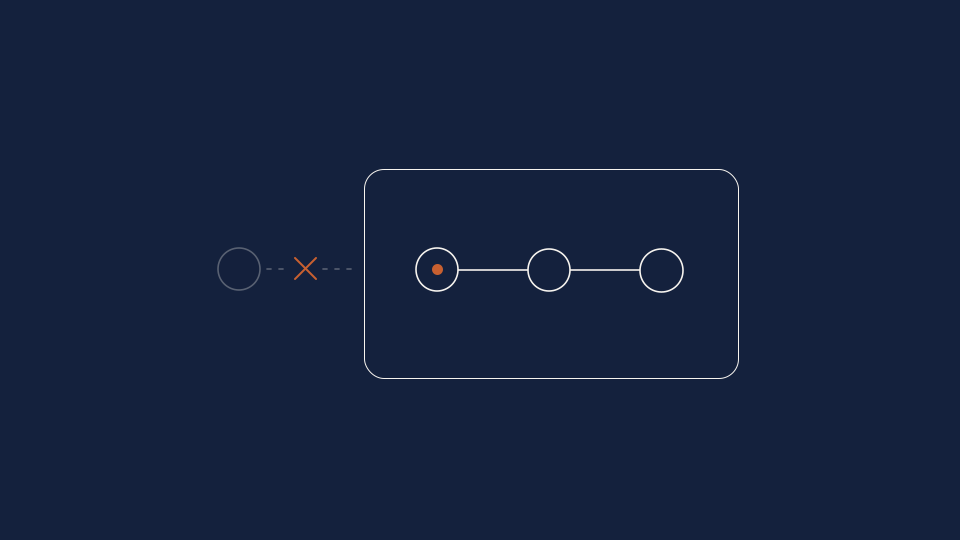
Your data needs to be protected from foreign legal reach.
That requires a clear European ownership structure with no non-EU parent company. Edora Cloud is 100% Danish-owned and subject to Danish and EU law, so ownership, accountability and legal control stay inside the EU.
That gives you a clear, documentable basis for auditors, regulators and your board.
European operations and full control over access
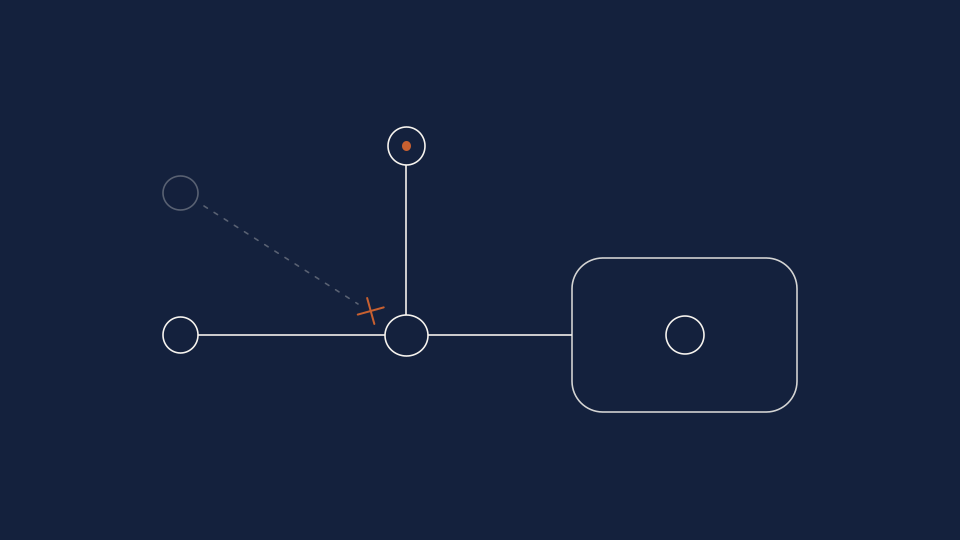
The platform is operated and monitored by a specialist team in Denmark, working under EU law.
That reduces dependence on non-European operations teams and gives you transparency over who has access to your systems and your data.
You keep control of access, processes and operational decisions.
Open architecture without needless lock-in
Technical sovereignty is about keeping the ability to move, change and control your solution.
Edora Cloud is built on open source, open APIs and standardised technologies. That makes an exit strategy technically realistic and reduces the risk of being locked into a single proprietary platform.
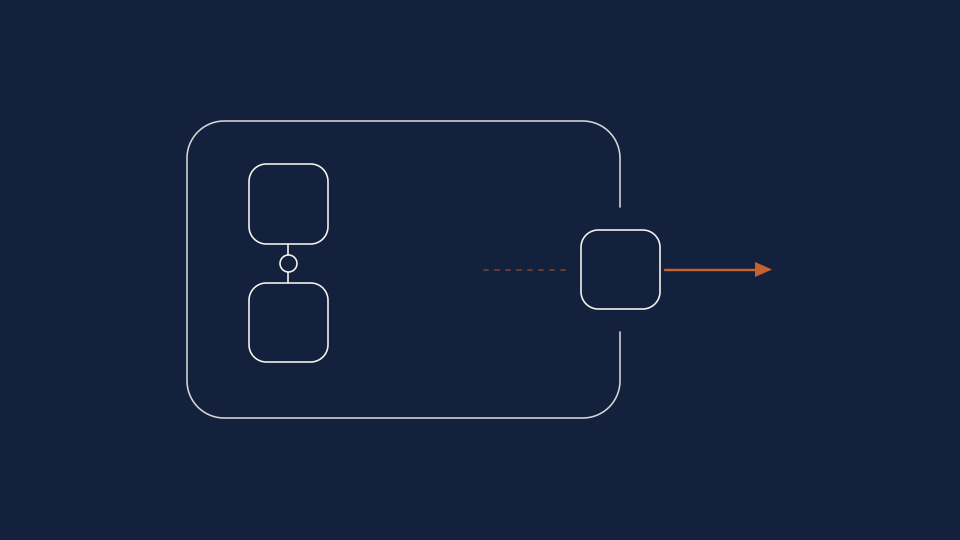
Data traffic can also be isolated on dedicated, closed network infrastructure via Cloud Connect.
DOCUMENTABLE
Sovereignty has to be provable
Sovereignty has to stand up to auditors, regulators and your board. Edora Cloud therefore rests on facts that can be verified: a clean European ownership chain, operations under EU jurisdiction, ISAE 3402 Type 2 and ISAE 3000 audits, ISO 27001 due in Q4 2026, and an architecture in which data never leaves the closed network.
Sovereignty is a property of the construction, not a form of words in a contract.
-
Sovereignty has stopped being a technical IT detail — it has become a strategic board-level responsibility. That is exactly the problem we built Edora Cloud to solve.

QUESTIONS & ANSWERS
What management teams ask most often
Isn't "data in Europe" legally enough?
Not necessarily. Where data physically sits does not on its own determine which laws the provider is subject to. If the cloud provider has a non-EU parent company, the provider may still fall under that country's legislation. So you should assess data location, ownership, operations and legal structure together.
What makes Edora Cloud's sovereignty different?
Edora Cloud keeps ownership, operations, technology and jurisdiction inside the EU. The platform is 100% Danish-owned, run by a specialist team in Denmark, and built on an open architecture with no dependence on a non-EU parent company. That creates structural sovereignty rather than merely local data residency.
How does open source reduce the risk of vendor lock-in?
Proprietary platforms can make migration and exit expensive, complex and slow. Edora Cloud is built on open APIs, standardised technologies and open-source components. That makes it easier to move workloads, change provider, or repatriate data and systems. An exit strategy becomes a real technical option — not just a clause in a contract.
What documentation can we show auditors and regulators?
Edora Cloud documents its controls through ISAE 3402 Type 2 and ISAE 3000, among others. The platform is also built on a documentable European ownership structure, European operations, and a technical architecture designed for transparency and control. ISO 27001 is planned for Q4 2026.
What does a closed network mean in practice?
With Cloud Connect, data traffic can run over dedicated, isolated network infrastructure rather than the public internet. That reduces exposure to external threats and gives you greater control over how data moves between your environments and Edora Cloud.