

Modernise the operationally critical without losing control
THE TRANSPORT SECTOR
Systems that must not stop, in a sector under tightening supervision
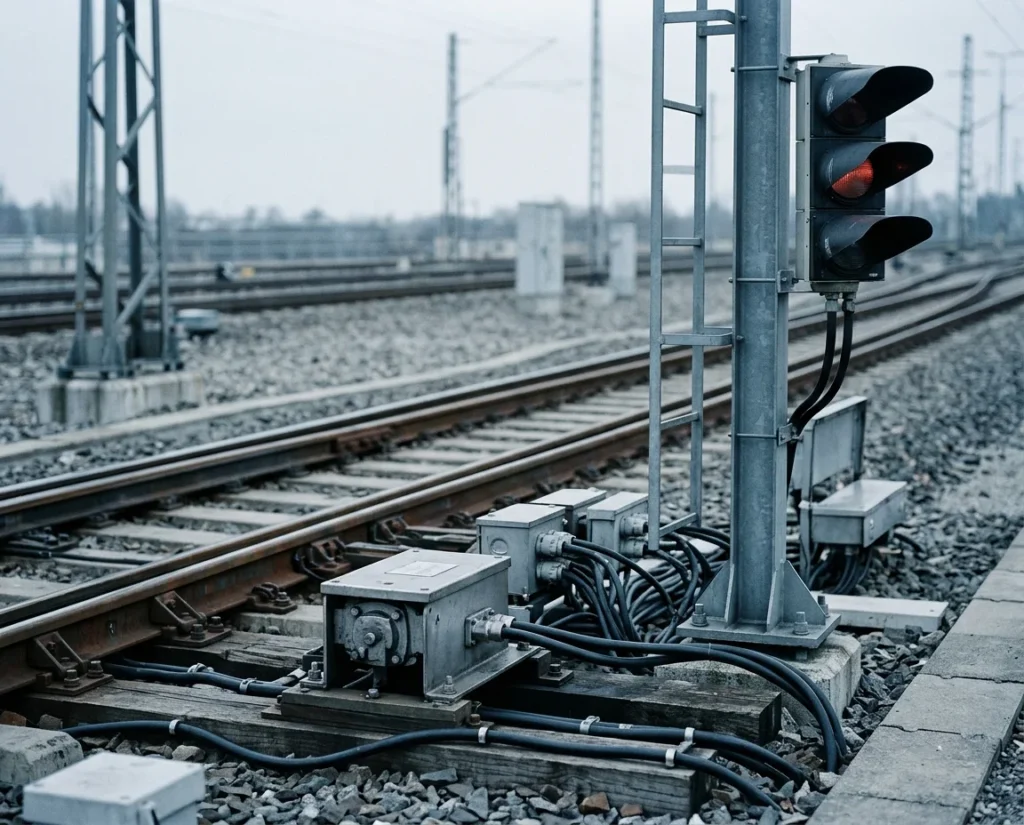
Transport is critical infrastructure under NIS2 — and the directive reaches both public infrastructure owners and private operators above a certain size. For the systems that control signalling, traffic, terminals and fleets, downtime is a safety incident rather than an inconvenience.
Much of the technology is also purpose-built and tightly integrated with physical equipment. So the question isn’t whether to modernise, but how to do it without giving up control, security and exit.
THE APPROACH
The three factors that decide whether operational systems can move
Edora Cloud is built for all three.

It stays where it needs to be
The platform can sit locally at the node, so latency-critical and safety-related systems are processed on site rather than in a distant datacentre.

It runs when the connection doesn't
Each location operates independently. A severed fibre to one location doesn’t halt operations everywhere else.

You can get back out
Open source with no proprietary layers. An exit is technically real, not a clause in a contract you can’t enforce.
SAFETY & OPERATIONS
When downtime is a safety matter, local autonomy isn't a luxury
For systems that control physical movement, depending on a distant connection is itself a risk. Edora Cloud places operationally critical workloads locally and lets each location run independently: if a location loses connectivity, its operations continue, and replication resumes automatically once the connection is back.

EDORA CLOUD CONNECT
Many locations, tied together without touching the internet
Transport infrastructure is dispersed: stations along the line, terminals at the port, systems in the tower. Edora’s closed optical network links the locations with failover between them, so traffic between your systems never crosses the public internet. The same platform runs at every location, operated by Edora.

HOW YOU GET STARTED
A controlled route, not a leap
Modernising operationally critical systems doesn’t happen big-bang. The process starts with a no-obligation assessment that maps your exposure, and continues with a controlled migration in which performance and security are validated before production.
Procurement follows your organisation: public infrastructure owners in Denmark can buy through the SKI framework agreements with no new tender process, while private operators contract with us directly.
The platform is audited to ISAE 3402 Type 2 and ISAE 3000, with ISO 27001 planned for the fourth quarter of 2026.
-
For transport infrastructure, operational reliability and control are not negotiable. Our job is to make modernisation possible without asking the sector to give up either one.

QUESTIONS & ANSWERS
What transport organisations most often assess
Can operationally critical systems sit locally?
Yes. The whole platform can be delivered and operated locally at the node via EU Cloud in a Box, so latency-critical and safety-related systems are processed on site.
What happens if connectivity to a location is cut?
Each location operates independently. If the link drops, operations continue locally, and replication resumes automatically once connectivity is restored.
Are we tying ourselves to a single supplier?
No. The platform is open source with no proprietary layers, so workloads and data can be moved. An exit is technically real, not merely a clause in a contract.
How do we procure the platform?
It depends on who you are. Public infrastructure owners in Denmark can procure through the SKI framework agreements with no new tender process: migration and consultancy via 02.17, servers, storage and datacentre solutions via 02.03, and IT operations via the 02.22 dynamic purchasing system. Private operators contract with us directly, outside the framework agreements.
How does the platform support NIS2?
Security, audit logging, access management and supplier governance are built into the platform, producing the documentation regulators ask for.